


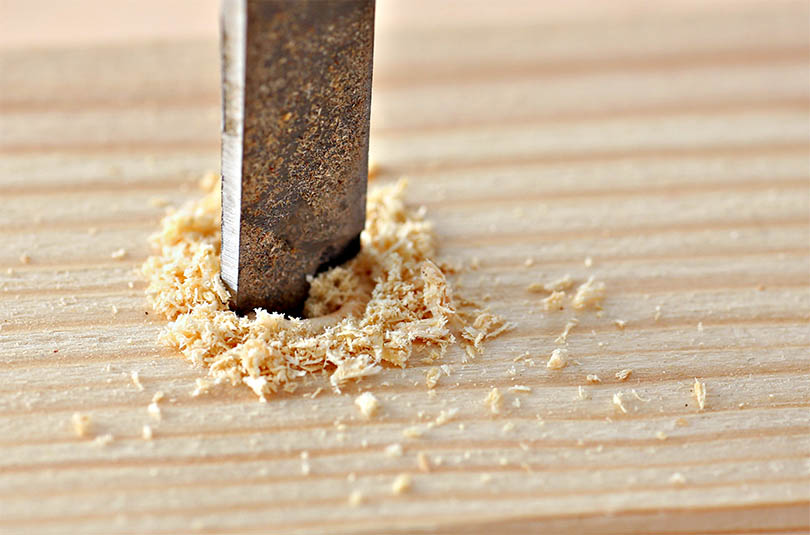
Solutions for collecting fine dust, sawdust, wood shavings and offcuts generated by saws, sanding machines, planers, moulding machines and CNC machining centres.
Wood processing generates residues that vary greatly in shape, size, weight and behaviour. Cutting, milling, planing, sanding and drilling can produce:
Read more
extremely fine dust; sawdust; wood shavings; planer shavings; fragments; lightweight and bulky offcuts; residues from MDF, particleboard and composite panels; dust deposited on machinery; and dust suspended in the air. The correct extraction architecture must be carefully defined according to the woodworking process being carried out. Dust generated by sanding machines requires specific filtration and an effective filter-cleaning system. Wood shavings and offcuts generated by planers, saws and moulding machines instead require constant airflow, large diameters and greater collection capacity.
FEVI industrial vacuum cleaners and offcut extractors for woodworking
The compatibility shown below is application-based. The final configuration must be validated according to the specific woodworking process and the nature of the residue.
Criteria for selecting the wood-extraction architecture
The selection and correct configuration of FEVI machines must be structured by analysing three fundamental areas of the department:
1. Residue Geometry
Assessment of the material, whether extremely fine airborne dust, mixed-particle-size sawdust, planer shavings or lightweight plastic offcuts from coated panels, together with its bulk density.
2. Production-Line Configuration
Calculation of the number of extraction outlets, the diameters required by planers or CNC machines, the total piping run and the simultaneous-use factor.
3. Safety and Organic-Dust Risks
Identification of health risks associated with hardwoods or the adhesives and resins in composite panels, together with verification of the need for ATEX marking for combustible organic dust.
Dust, sawdust, wood shavings and offcuts are not the same
Fine wood dust and health risks: Sanding and the processing of MDF and composite panels produce fine, lightweight particles that rapidly reach the filter, remain suspended in the air, settle on machinery and penetrate electrical components. Wood dust can irritate the eyes, nose and respiratory tract, causing asthma and dermatitis. Prolonged exposure to dust from certain hardwoods is also associated with sinonasal cancers. Routine dry cleaning using brooms or compressed air produces high concentrations of airborne dust. Industry guidance shows considerably higher exposure during blowing and sweeping than when using a correctly filtered industrial vacuum cleaner.
Ordinary cutting sawdust: Sawdust generally has a larger particle size than sanding dust, but it may still contain a very fine fraction. Effective collection requires assessment of: airflow; hose diameter; distance from the machine; number of bends; quantity produced; filter surface area; and container capacity.
Wood shavings, planer shavings and bulky offcuts: Planers, moulding machines, lathes and CNC machining centres generate shavings with widely varying shapes and volumes. Lightweight shavings primarily require high airflow, large capture inlets, generous piping without restrictions and high collection capacity. A hose that is too small causes blockages even when the vacuum unit appears sufficiently powerful. Lightweight cuttings, strips and fragments with a low bulk density must be handled using a dedicated offcut extractor designed for large volumes and filter-bag collection, connected directly to the machinery.
Applications and processing stages in woodworking departments
Cutting with saws and mitre saws
Circular saws, panel saws, mitre saws and multi-rip saws simultaneously generate dust, sawdust and fragments. The extraction system must capture the material close to the blade, taking into account the projection direction, peripheral speed, shroud dimensions, upper and lower outlets and required airflow. Machines generating large quantities must be equipped with localised extraction designed to contain the material before it disperses, while respecting the minimum diameters specified by the manufacturer.
Planing and moulding
Planers and moulding machines generate very large quantities of lightweight shavings and curls. These applications strictly require high airflow, large-diameter piping, a preliminary separation system and substantial collection capacity to manage the simultaneous operation of several extraction outlets. A small high-vacuum industrial vacuum cleaner with a narrow hose would be completely inadequate in these situations.
Milling and CNC machining centres
Machining centres for profiles or panels generate fine dust, sawdust, wood shavings and residues concentrated inside the machine enclosure. The solution must be integrated with the machine and sized by considering the outlet diameters, tools used, internal enclosure volume, production cycle, operational continuity and actual distance from the extraction unit.
Sanding and drilling panels
Belt sanders, orbital sanders and calibrating sanders generate extremely fine dust. In these applications, PTFE-membrane cartridges, a large filter surface area, automatic cleaning and, where appropriate, absolute HEPA filtration are essential. Extraction connected directly to the tool provides highly effective localised capture. MDF, particleboard, plywood and coated panels generate fine dust containing wood, resins, adhesives, laminates and additives. The configuration must therefore be verified according to the actual composition of the panel.
Technology classification of FEVI systems
To address every machinery-extraction and cleaning requirement accurately, FEVI organises its solutions into four separate families:
- High-Vacuum Industrial Vacuum Cleaner: The optimal choice for cleaning machinery and floors, removing deposited dust and connecting directly to sanding machines and power tools. It operates effectively with small-diameter piping and allows fine dust to be conveyed over linear distances.
- High-Airflow Offcut Extractor (RVS Range): Designed to capture lightweight shavings, planer shavings, cuttings and bulky materials with a low bulk density directly from the machine. It collects the waste inside filter bags with high volumetric efficiency. The FEVI RVS range is specifically developed for this purpose and is available with a single-phase, three-phase or ATEX blower. It is not suitable for fine dust or heavy metal swarf.
- Dust Collector (High Airflow / Low Vacuum): Suitable when dust becomes airborne during dosing, transfer, mixing, sieving or ingredient loading. It is connected to hoods, enclosures, hoppers or capture points and moves a greater volume of air than a conventional industrial vacuum cleaner.
- Centralised Facility System: The solution to consider when several machines operate simultaneously, different departments must be served over long distances, chip volumes are industrial-scale or the coordinated automatic control of dampers and power is required. The design starts with the number of extraction outlets and the total required airflow.
Regulatory framework and ATEX explosion risk for wood dust
Wood dust is a highly combustible material. When sufficiently fine particles are dispersed in air at the correct concentration and encounter an ignition source, a rapid fire or explosion may occur. Deposited accumulations can also fuel hazardous secondary fires. This does not mean that every woodworking workshop or every area of the department is automatically subject to ATEX requirements. The classification must be established by the user by considering: quantity of dust; particle size; frequency of dust-cloud formation; concentration; type of wood or panel being processed; minimum ignition energy (MIE); ignition temperature; presence of sparks; connected machinery; ventilation; and cleaning frequency. When the risk assessment identifies a possible explosive atmosphere, the industrial vacuum cleaner and the entire system must have characteristics and markings compatible with the classified zone and the dust present. Remember that an ATEX machine does not make the entire line safe on its own. Conductive flexible piping, connections, hoods, discharge systems and the effectiveness of grounding must also be assessed. Connecting an ATEX industrial vacuum cleaner to generic piping and accessories is incorrect.
Paints, adhesives, solvents and incandescent residues
Woodworking often includes bonding, painting, impregnation or the application of solvent-based undercoats, including polyurethane or epoxy systems. An industrial vacuum cleaner for dust must never be used to collect vapours from solvents, paints, isocyanates, adhesives or volatile organic compounds (VOCs). These contaminants require capture and ventilation systems specifically designed for gases and vapours. Similarly, standard machines must never be used to collect sparks, incandescent nails, embers or hot slag directly from thermal cutting operations, as these could ignite the contents of the drum. Where these risks are present, spark separators and dedicated detection and suppression systems must be integrated.
Quick configuration selection guide
Scenarios in non-classified areas (No ATEX)
- Small portable sander or restoration work: FEVI PULSE 11XM, 11XA or FEVI 220 ICLEAN;
- Larger quantities of fine dust with single-phase power: FEVI 350 ICLEAN, or FEVI 221 PULSE for Longopac collection;
- Prolonged connection to tools or fixed overhead lines: FEVI TDC30 ICLEAN, or FEVI HDC 355 ICLEAN for more demanding networks;
- Fine suspended airborne dust captured through hoods or arms: FEVI DTX 1500 BASIC for a single workstation or FEVI DTX 2500 AIRCLEAN.
Scenarios involving specific risks or ATEX areas
- Lightweight shavings and planer shavings collected directly from machinery: FEVI RVS, in the standard or FEVI RVS ATEX 2-22 certified version;
- Suspended combustible fine dust in Zone 22: FEVI DTX 2500 AIRCLEAN ATEX 2-22, suitable for group IIIC aluminium and PVC dust;
- Localised cleaning of dry dust in Zone 22: FEVI BSL 120 BASIC ATEX 22 or the pneumatic FEVI S PN ATEX range;
- Large multi-machine sites: Where several lines or distant booths are present, the FEVI technical department designs customised centralised systems with an external central vacuum unit, isolation valves, automatic dampers and fixed piping networks dedicated to the chromatic separation of the flows.
Key parameters to verify before configuration
Before defining the proposal, we assess the woodworking variables together: type of wood, including hardwood, softwood or MDF and particleboard composite panels containing adhesives and resins; type of waste, such as fine dust, sawdust, large quantities of wood shavings or bulky offcuts; particle size, bulk density and moisture content; risk of sparks or embers and the presence of solvents or paints; system parameters, including required airflow or vacuum pressure, piping length, hose diameter and number of bends; connection to a tool or hood; cycle duration; available power supply, whether single-phase, three-phase or compressed air; need for Longopac or absolute HEPA filtration stages; ATEX zone classification; and the layout of open or confined spaces.
Request a sizing assessment for your woodworking department
Describe the type of wood being processed, whether hardwood, softwood or composite panels, the connected operating machine, nature of the residue produced, estimated hourly quantities, diameter of the extraction outlets, total piping run and length, number of machines operating simultaneously, total operating-cycle duration and any ATEX classification of the department. Our engineering team will assess whether to implement an industrial vacuum cleaner for fine dust, a high-volume offcut extractor, a high-airflow dust collector, an ATEX safety configuration or a complete customised centralised system. Contact us to configure the ideal extraction system for your machinery.
Woodworking Solutions FAQ
Which industrial vacuum cleaner should be used for fine wood dust?
Read more
For small operations and portable workshop sanders, the compact FEVI PULSE 11XM or 11XA models and FEVI 220 ICLEAN can be considered. For larger quantities and intensive continuous sanding, the higher-capacity FEVI 350 ICLEAN, TDC30 ICLEAN or HDC 355 ICLEAN models are recommended.
Which extraction system should be selected for lightweight wood shavings and planer sawdust?
Read more
For lightweight shavings, curls and bulky offcuts with a low bulk density, the FEVI RVS offcut-extractor range is the most suitable solution, collecting the material directly inside filter bags. For heavier materials or complex piping networks, the system must be sized according to airflow and separation requirements.
What is the functional difference between an industrial vacuum cleaner and an offcut extractor?
Read more
An industrial vacuum cleaner for fine dust prioritises high operating vacuum pressure, advanced Class M or HEPA filtration systems and continuous cartridge cleaning. An offcut extractor instead prioritises airflow, high usable collection volume and the unrestricted passage of lightweight and very bulky waste.
Which type of industrial vacuum cleaner should be connected to an orbital or belt sander?
Read more
A compact single-phase model with ICLEAN or PULSE cleaning is sufficient for a single tool used intermittently. For prolonged industrial processing or fixed calibrating sanders, the consistent performance of the three-phase blowers in FEVI TDC30 ICLEAN or FEVI HDC 355 ICLEAN is preferable.
Which extraction system should be combined with a planer?
Read more
A planer generates very large volumes of wood shavings and curls in a short time and therefore requires high airflow, large-diameter piping and substantial collection capacity. The FEVI RVS range can be specifically configured for direct machine connection and compatible lightweight residues.
Are all woodworking workshops and wood-cutting departments subject to ATEX requirements?
Read more
No. Hazardous-area classification is not automatic. It depends on the actual probability that an explosive atmosphere will form over time, based on the particle size of the airborne dust, installed ventilation systems, ignition sources and the frequency of cleaning procedures.
Can ordinary fine wood dust be considered explosive?
Read more
Yes. When finely divided and dispersed in air at sufficient concentrations, they can form a highly explosive mixture when they encounter an ignition source, such as sparks. Deposited accumulations can also fuel hazardous secondary fires.
Is the compact FEVI BSL 120 ATEX suitable for collecting wood dust?
Read more
It can be considered for localised cleaning operations in Zone 22 involving completely dry wood dust compatible with its IIIB non-conductive-dust group marking. It is not automatically suitable for large quantities of sawdust.
In which workshop operating scenarios is a centrifugal dust collector required?
Read more
A dust collector, such as the FEVI DTX range, is required when fine dust remains suspended in the air and must be actively captured at source through containment hoods, downdraught tables, articulated extraction arms or open machine enclosures.
When does designing a centralised extraction system become essential?
Read more
When several operating machines, including saws, planers and CNC machining centres, work simultaneously during the same shift, or when the total quantity of shavings and airflow required by the extraction outlets cannot physically be managed by individual mobile industrial vacuum cleaners.
Is it permitted to clean machinery and electrical panels using compressed-air blowing?
Read more
The use of compressed-air blowing or brooms should be avoided because it immediately resuspends the finest respirable particles, increasing operator exposure. A Class M industrial vacuum cleaner is the correct solution for routine cleaning.
Does installing an absolute HEPA filter guarantee safety under all conditions?
Read more
No. An absolute HEPA filter provides very high capture efficiency for microparticles, but the configuration must be selected according to the actual risk. For normal professional woodworking-workshop cleaning, machines certified to at least Class M should be used, with verification of sealing, gaskets and protected replacement procedures.
Is the Longopac continuous-bag collection system useful in the woodworking sector?
Read more
Yes. It is particularly useful when fine, dry dust must be collected, bagged and sealed while minimising direct operator contact during the removal of spent material.
Can paint residues, adhesives or solvents be collected using the same industrial vacuum cleaner used for wood?
Read more
No, not automatically or through mixed use. Vapours from paints, adhesives, impregnating products, thinners or isocyanates require dedicated forced-ventilation and capture systems for gases and volatile organic compounds (VOCs), together with a careful and separate ATEX risk assessment.

